წესები და „გამონაკლისები“: ქართულში სამპირიანი ზმნების სუპლეტიური ფორმების კოგნიტიური ინტერპტეტაცია
DOI:
https://doi.org/10.55804/jtsu.15120473.2025.18.01საკვანძო სიტყვები:
regular-irregular, exceptional, linguistic forms, suppletive forms, conceptual structure, overlapping constructionsანოტაცია
- Theoretical background. Language is a system which is defined by general models of linguistic structuring of the world. Exceptions are out of such prototypical models. They are created by the specific cognitive processes developed on the basis of the peculiar restrictions, hierarchical relations, competitive and/or alignment constraints which are characteristic for the language system (LS) as a whole. We suppose: the restrictions, relations or constraints are important internal features of the LS; their combinations are complex and specific; this creates an illusion of the exception being ‘out of the LS’. In order to understand the logics of the exceptions it seems effective to employ a cognitive approach. We need to build definite conceptual structures for every concrete exceptional pattern. Through such an analysis it can be clarified that the exceptions are regular elements of the LS.
- Exceptional ditransitive verb forms (EDVF) in Georgian. Some ditransitive verbs like ‘give’ show recipient person suppletion that is typologically well known phenomenon for some languages. In Georgian such verbs have specific exceptional paradigm: mi-v(SI)-eci “I gave smth. to him/her”, but: mo-m(IOI)-c-a(SIII) (not: *mi-m-c-a) “(S)he gave smth. to me”; mi-0(SII)-eci “You gave smth. to him/her”, but: mo-g(IOII)-c-a(SIII) (not: mi-g-c-a) “(S)he gave smth. to you-sg”; mi-s(IOIII)-c-a(SIII) (never: *mo-s-c-a “(S)he gave smth. to him/her”). The same suppletion according to the preverbs mi- and mo- is characteristic also for other ditransitive verbs: misc’ers “to write to”, mic’odeba “to deliver, to send”, mipurtxeba “to spit to”, mipereba “to caress to”, mikiraveba “to hire out to”, mitxoveba “to marry to” and others. Thus, mo- is used in case of I/II recipient and mi- in case of III recipient.
III. Conceptual structures of EDVF. Specific semantics of the ditransitive verb ‘to give’ (micema) can be represented by the following conceptual structure:
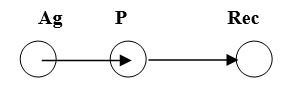
Preverbs mo- and mi- are the elements of linguistic realizations of the spatial relations in Georgian where two dimensions are valuable: ‘Ego Space’ and ‘Alter Space’. The opposition of the preverbs mo- : mi- is the linguistic representation of the cognitive opposition ES:AS. Thus, mo- marks a situation where an action is directed/oriented to I/II persons (ES), whereas mi- is the formal representation of a situation with an action directed/oriented to the III person. According to this opposition the conceptual relations can be represented by the following schemes:

I and II recipients are included in ES, while III recipient is excluded. If we match the two conceptual structures, the complex structures arise:

We suppose that such matching reflects the complex cognitive process of the linguistic structuring of the ‘to give’-type ditransitive verb concepts. It clarifies the basis of the ‘exceptional’, suppletive paradigms in Georgian: The linguistic structures arise in accordance with the conceptual meanings and must not be qualified as the ‘exceptional’ ones any more.
ლიტერატურა / წყაროების მითითება
ასათიანი 2003: R. Asatiani, Semantics and Typology of Dative Subject (on the Georgian Data)“, Proceedings of the Fourteenth Amsterdam Colloquium 2003, eds. P. Dekker and R. van Rooy, 69-75, The University of Amsterdam Press.
ასათიანი 2003: R. Asatiani, A Cognitive Approach to Exceptional Ditransitive Verb Forms in Georgian”. Rules and Exceptions: Using Exceptions for Empirical Research in Theoretical Linguistics, Series: Contemporary Studies in Descriptive Linguistics–Volume 34, Wien: “Peter Lang”, Oxford, Bern, Berlin, Bruxelles, Frankfurt am Main, New York.
ასათიანი 1996: რ. ასათიანი, ქართველურ ენათა ტიპოლოგიის საკითხები (გრამატიკულ კატეგორიათა სისტემაში დომინანტური კატეგორიის დადგენის თვალსაზრისით), გამომცემლობა „მეცნიერება“, თბილისი.
გარდენფორსი 2000: P. Gärdenfors, Conceptual Spaces: The Geometry of Thoughts. Cambridge, Massachusetts, London, England: The MIT Press.
კროფტი, კრუზი 2005: უ. კროფტი, დ. ლ.კრუზი, კოგნიტიური ლინგვისტიკა, ენა, ლოგიკა, კომპიუტერიზაცია – I, „დეგაპრინტი“, თბილისი.
ლობნერი 2010: ს. ლობნერი, „მნიშვნელობა და შემეცნება“, ენა, ლოგიკა, კომპიუტერიზაცია – III, „დეგაპრინტი“, თბილისი.
შანიძე 1973: ა. შანიძე, ქართული ენის გრამატიკის საფუძვლები, თსუ გამომცემლობა, თბილისი.
ჯეკენდოფი 2015: რ. ჯეკენდოფი, „აზროვნება და მნიშვნელობა“, ენა, ლოგიკა, კომპიუტერიზაცია – IV, „დეგაპრინტი“, თბილისი.
Downloads
გამოქვეყნებული
ციტირების წესი
გამოცემა
სექცია
ლიცენზია
საავტორო უფლებები (c) 2025 ყველა უფლება ეკუთვნით ავტორებს. ჟურნალი სარგებლობს პირველი, ექსკლუზიური გამოქვეყნების უფლებით, საავტორო უფლებების გადაცემის გარეშე.

This work is licensed under a Creative Commons Attribution 4.0 International License.
ყველა უფლება ეკუთვნით ავტორებს. ჟურნალი სარგებლობს პირველი, ექსკლუზიური გამოქვეყნების უფლებით, საავტორო უფლებების მიღების გარეშე.